
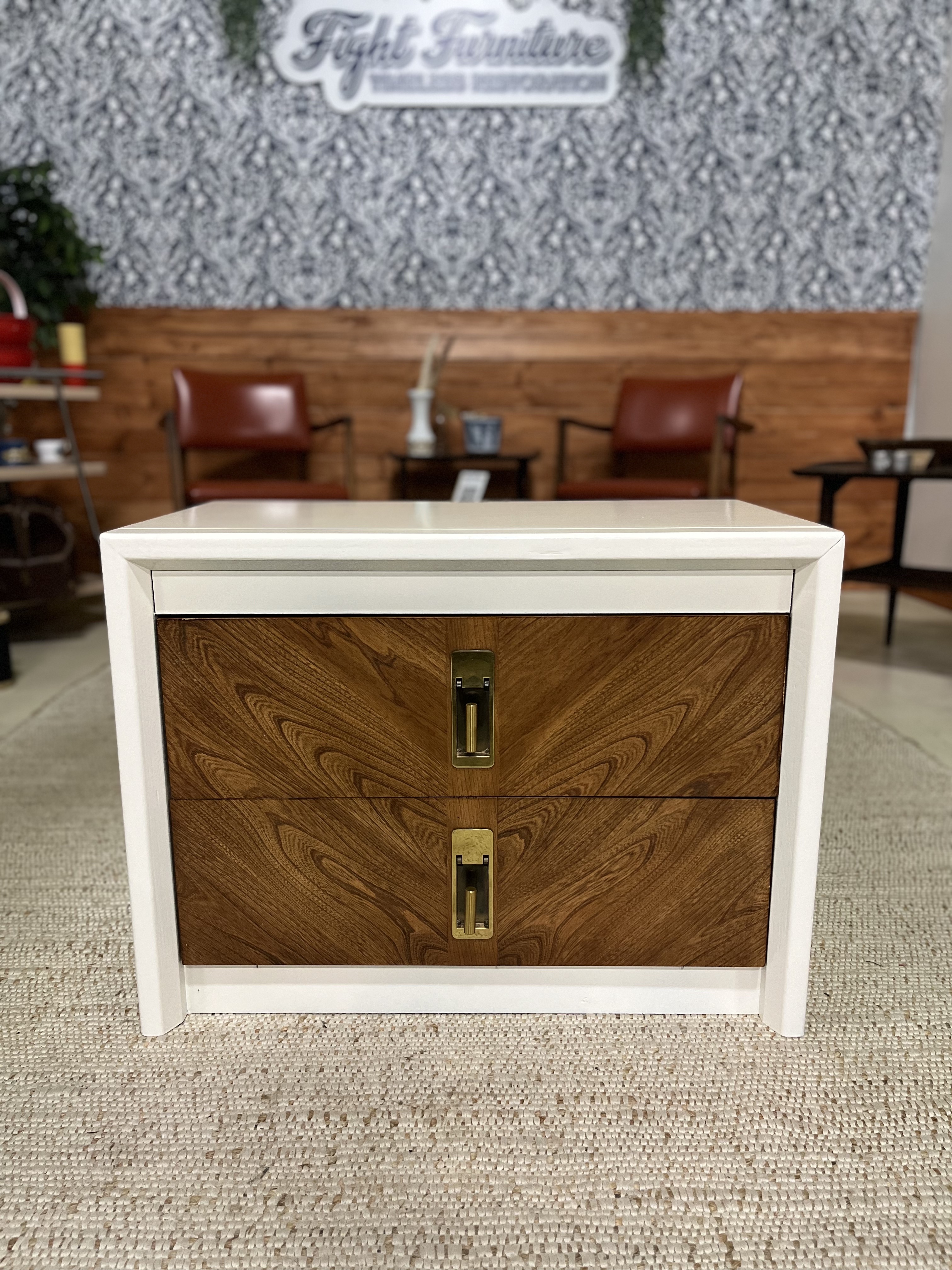

When I first began working with furniture, I’d complete a project and feel relatively satisfied with the end result, but then I’d see a manufactured piece of furniture and think, “Wow, my furniture looks nothing like that.”
These professionally finished pieces had no brush marks, no dust specs, no bumps. At all. No matter my best efforts, my work was full of blemishes. My work was amateur work.
Piece by piece, I learned little tricks of the trade. I read books. I studied the work of professionals. I accumulated many trials and many errors.
But now, my finishes are clean, smooth, and unblemished. Following my guide below, I’ll show you how to professionally finish painted, polyurethaned, and lacquered furniture. Step-by-step.
(I receive NO commissions from any of the recommendations below. This is all personal experience without corporate influence.)
How to Get a Smooth Painted Finish for Furniture
Brush marks. The great shame of my early work. They were insidious. So, I transitioned to using rollers. Then, I had roller marks.
Thus, the greatest improvement in my furniture painting quality was investing in better paint.
Which Paint Type Do I Use?
I’ve used chalk paint, milk paint, latex paint, and oil-based paint. All have their virtues. But when it comes to furniture, I value two virtues above all: durability and self-laying technology.
Because of these priorities, I exclusively work with Sherwin Williams’ Emerald Urethane Trim Enamel. It has urethane added, so it’s extra durable. And after you brush, roll, or spray, the paint lays flat and even. I love this paint, which comes in matte, satin, semi-gloss, and gloss. I prefer satin and semi-gloss for both appearance, and you guessed it, durability. Often, when I finish, the piece looks like it’s been dipped in paint without any lines or blemishes. Because it has urethane added, it doesn’t require a topcoat of polyurethane either.
How Do I Apply the Paint?
With a paint sprayer. It just looks better. Period. And it’s much faster than rolling or brushing.
Sometimes, for the top of pieces, I’ll use a foam, high-density roller. But usually, I spray everything. The quality of the finish is unmatched.
Here’s my favorite sprayer by HomeRight.
If you can’t spray, roll everything you can!
What Else? There Has to Be Something Else!
First, sand down the piece of furniture to create a uniform surface for the paint. Any abnormality under the paint will usually show through the paint. Using an orbital sander, I’ll begin with 150 grit and work up to 225 grit.
Then, always sand between coats. Even after your first layer of primer. This is the magic sauce to a professional paint job.
To avoid the accumulation of dust, I spray furniture inside of spraying tent, but even inside of a tent, somehow, dust accumulates between coats. So, it’s paramount to use sandpaper (I use 320-grit) to remove the bumps. Then, I wipe the sanded dust away with a wetted cloth, followed by a quick pass with a tack cloth.
Follow this process between each paint coat and you’ll have a beautiful, smooth finish.
Check out the video example below:
How to Get a Smooth and Professional Polyurethane Finish
No surprises here, but for a polyurethane finish, the process is similar to paint application.
Here’s a review of the key principles:
- Sand the surface smooth first
- Spray the polyurethane
- Sand between coats with 320 grit sandpaper (if a white dust appears, don’t worry about it! It’ll all smooth out to a clear finish with the next coat.)
If you don’t have a sprayer, no worries! I like Varathane’s Spray Polyurethane product. It dries fast and it lays flat.
Pro Tip: To minimize the accumulation of dust between your coats, grab a spare spray bottle, fill it with water, and spray the water across the floor around where you’ll be working. Do this an hour before you start, and you’ll be surprised how much it helps!
How to Get a Smooth Lacquered Finish
Once more, the same principles apply. Sand the surface smooth beneath. Spray. Then sand between spray coats.
Given I do not have an air compressor spray system, I use Mohawk spray-can (rattle-can) products for my lacquer finishes. The results have been remarkable. Here’s a video step-by-step guide for how I use Mohawk products.
If you try your hand at any of my suggestions, I’d love to hear about it! Tag me on social media (@fightfurniture) or send me an email (fightfurniture@gmail.com) with your photos.
Leave a Reply