
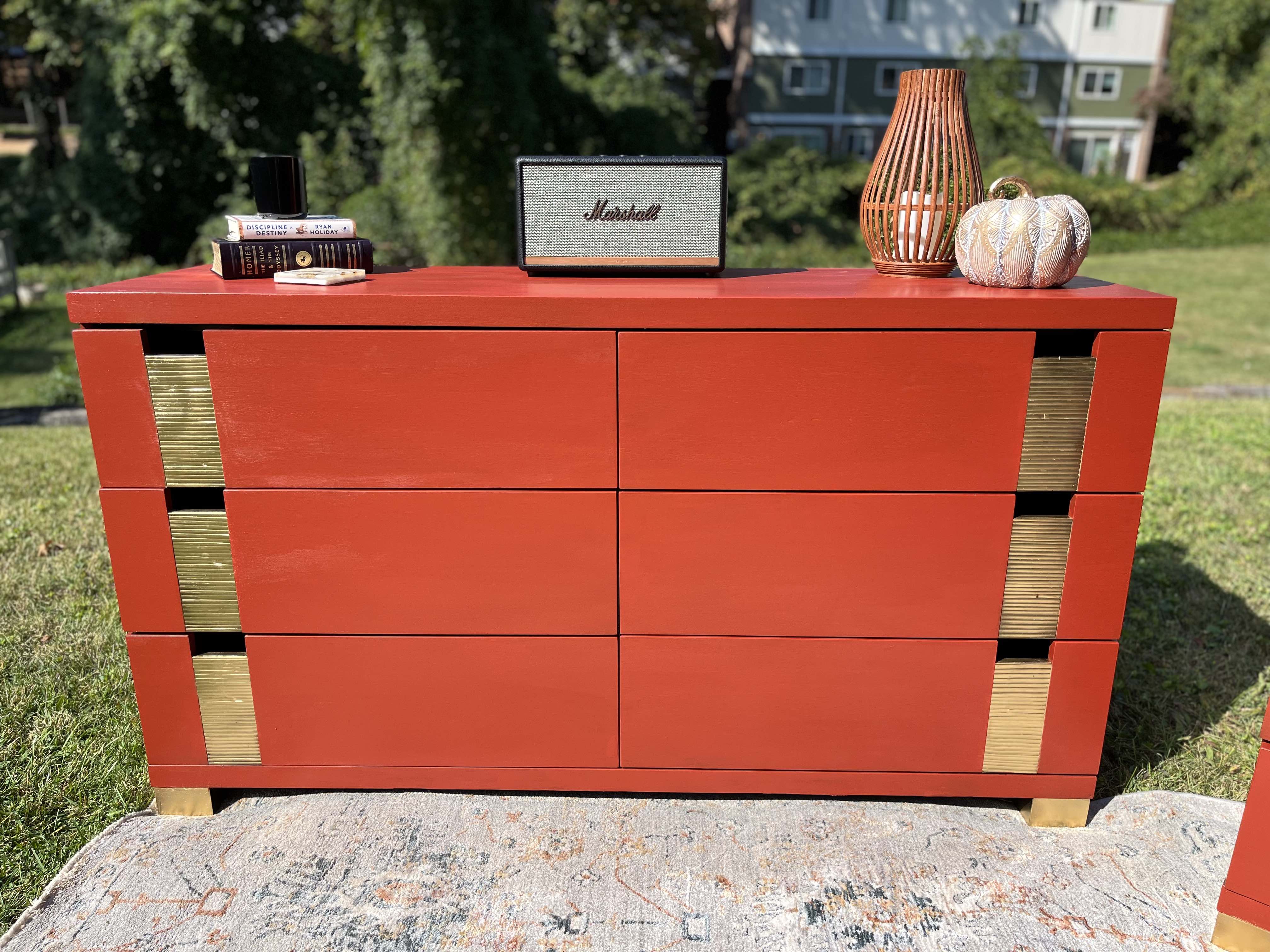

Yes, staging is important, as the furniture influencers will tell you. Golden lighting is paramount, they will also tell you. But so is price, description, and communication. Based on my experience of selling over fifty pieces of furniture on Facebook Marketplace, I can tell you it all matters. This guide today is designed to help you stack the selling odds in your favor—with strategies in addition to good staging and lighting—so you can sell your furniture for maximal value, while avoiding scammers and ghosters.
I got my start in furniture by furniture flipping. Out by the curb, as the cliche goes, I found an abandoned children’s picnic table, its wood warped, its paint flaking. But it was structurally intact, so I sanded the piece, painted it light blue, then tattooed it with a quote from Christopher Robin. Why? Well, I’d just quit my job as a doctor and needed the quote for self-inspiration and the money to pay bills. Did it sell? Five months later, yes. For $60. Because I had no clue about how to price furniture or how to gauge demand.

Compare that to today, where inside my furniture refinishing business, I only flip a piece of furniture if I’m guaranteed a profit of $250, a real possibility if you’re willing to invest time and creativity at the outset of your listing.
Declutter and clean the furniture (and surroundings) first
Nothing drains the value of a piece faster than having your old coffee mugs and dirty laundry stacked on top of it. People want visualizations of how the piece will feel inside their home, not realistic depictions of how your home looks.
First impressions matter. If the area around the piece is disheveled, you will get low-ball offers only. Make it sparkle. Polish the piece.
Think like an influencer (and add video)
Engagement is the influencer’s game. Likes. Swipes. Comments. Clicks. This is how you get famous in 2025. This is also how you get your piece at the top of Facebook Marketplace’s search rankings. Facebook wants people on the platform as long as possible so it can sell the user as many ads as possible. The more engaging your piece of furniture—just another piece of content to the Facebook algorithm—the more Facebook will display your piece to users.
To that end, ALWAYS ADD A VIDEO. See this last listing of mine. Nothing sexy here. Hardly any staging. But it had a short video. Within two weeks, it had over 500 views. And it sold. Videos keep people engaged for longer than photos do.
Use keywords in the description
Let’s say you’re trying to sell a farmhouse dining room table. Those last four words should appear as many times as possible in your title and in your description. Why? Because when people search for ‘farmhouse dining room table’, your listing—if that keyword is present frequently—will rank higher than other similar listings without that keyword used as frequently. I know, this sounds mechanical. I hate this formulaic stuff too, but it’s how Facebook works. Keywords. Use them by the metric ton.
Choose a catchy title
I use the word sleek too much. And stylish. But everyone wants furniture that’s sleek and stylish. And timeless too.
If it’s a midcentury piece, put midcentury in the title. If it’s art deco, place art deco in the title. Don’t overthink it. And don’t confuse your desk for a dresser or an end table for a nightstand. Get the category of furniture correct, and insert the category into the title, too. If it’s a brand with cache—like Lane or Hickory White or Haywood Wakefield or Jack Cartwright—put the manufacturer’s name in the title. If you’re not sure if it’s a fancy brand, but you know the name of it, put the name in anyway. If you don’t know the manufacturer, others won’t know it either, and to some, it’ll sound fancy. Can’t hurt your cause.
If someone asks to see the piece first, chances are slim you’re going to sell it to them
This is more for expectations than any real change in behavior because if someone asks to see one of my pieces, I always show it to them. Rarely do these appointments and repeated communications result in a sale though. Often, these people usually cancel or no show the appointment. Why? Because they’re window shoppers. They changed their mind. Remember, if they really loved the piece, they would have offered to purchase it immediately because they reviewed your videos, extensive gallery of photos, and detailed description. If someone asks to see the piece, I only show the piece during convenient hours for me, never when it will interfere with something productive or important. I’ve been no showed too many times.
The same goes for the standard, default message of “Is this still available?” If someone really wants to purchase your piece—instead of just window shopping—they’ll send you a real message like, “Hey Ryan, what a cool piece! Love the new midcentury feet and knobs. How would you feel about an offer of $310?” If they’re not motivated enough to send a real message, they’re probably not motivated enough to pay you or pick it up.
Track the views after a week
Under your listing’s information, you’ll be able to see the number of views and saves. If, after a week, that number is less than 50, your odds of selling the piece are pretty low. (Of course, if you live in a smaller area, it might be harder to get higher views, so patience may be more important.) This could be for multiple reasons. Troubleshoot through them:
- Is the piece priced too high? Did you check around for pricing of similar items?
- Do you have enough photos? (Again, you might have one great photo, but Facebook doesn’t care. Facebook only cares about how much time people spend looking at your post. Aim for more than 5 photos, ideally 10 photos, plus a video.)
- Are lighting and staging doing your piece justice? Would you stop and look at this listing? If not, consider restaging using the successful listings of your area as an example.
After troubleshooting, if you feel like your piece is setup to succeed, then delete and relist the piece. Sometimes, for whatever reason, the algorithm just doesn’t promote your piece. Delete and try again. If your piece is getting decent traction—say, 120 views after two weeks—make sure that you “Renew the listing”. Facebook lets you do this after two weeks, effectively restarting your listing without you having to delete it.
Don’t get discouraged
It takes two to tango, as they say. Sometimes, the right buyer doesn’t stumble across your piece. After weeks of no interest in a piece that I know is ready to sell, I’ll pull the listing down for a few weeks, then relist it. Boom, a day later it sells. Commerce is weird.
All we can do is control what we can control by stacking the deck in our favor and keeping our head up. Don’t sell your beloved furniture for pennies on the dollar. And don’t accept low-ball offers. If you’re done your research, know the piece is nice and valued appropriately, stick to your guns.
Looking for furniture refinishing tips? Check out our YouTube page for tutorials and furniture makeover stories.
Need the right supplies and equipment? See my full workshop of tools in our Guide to the Best Furniture Refinishing Supplies.
Disclaimer: Not all of these products are affiliate products, but some are attached with a link. If you purchase the product after clicking the link, I receive a small commission in return.
Leave a Reply